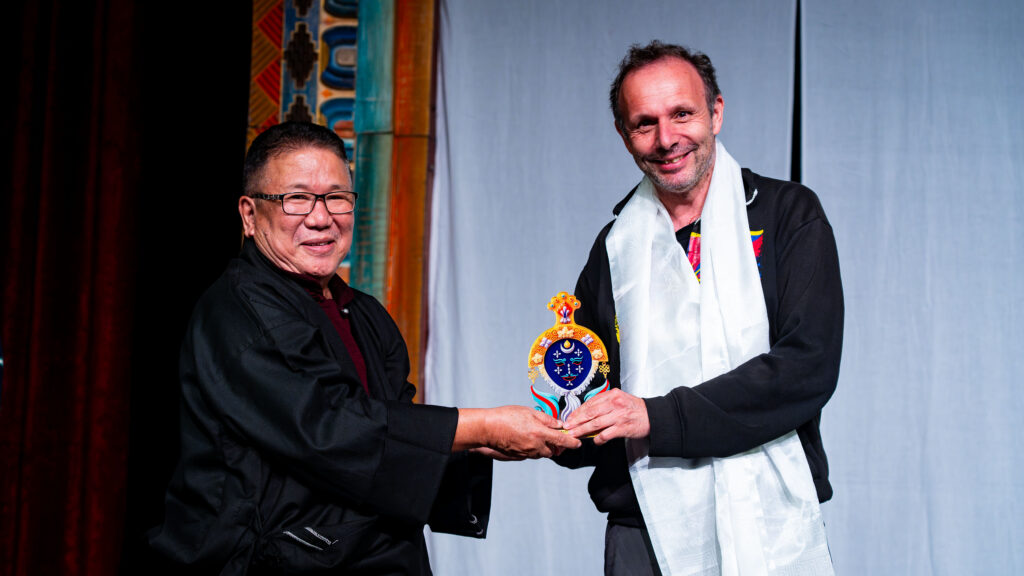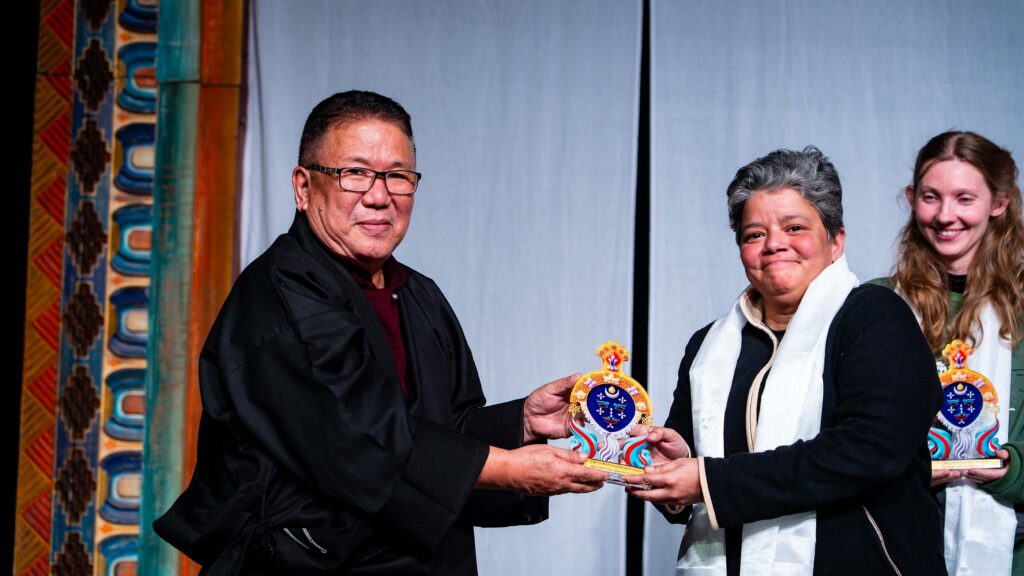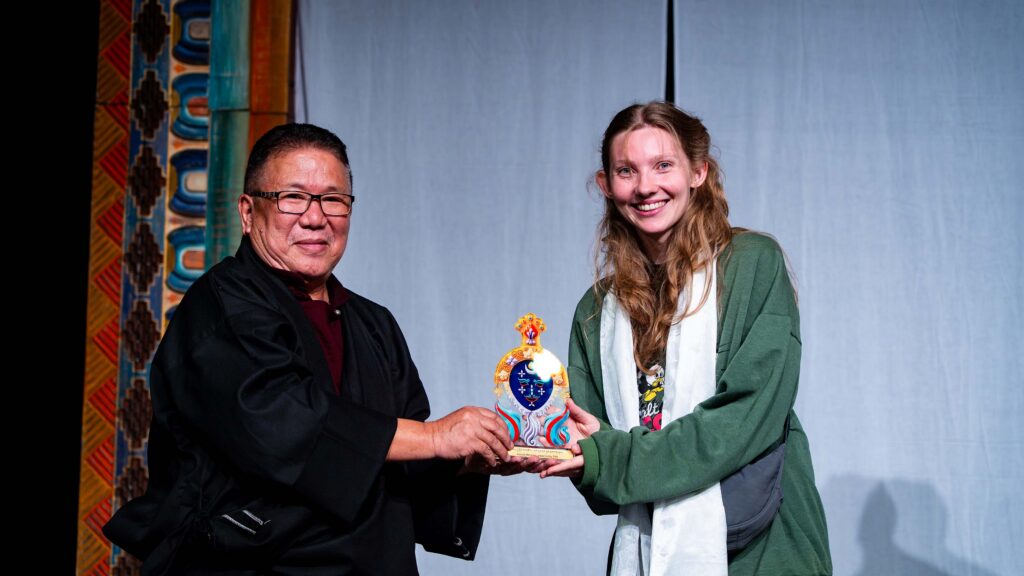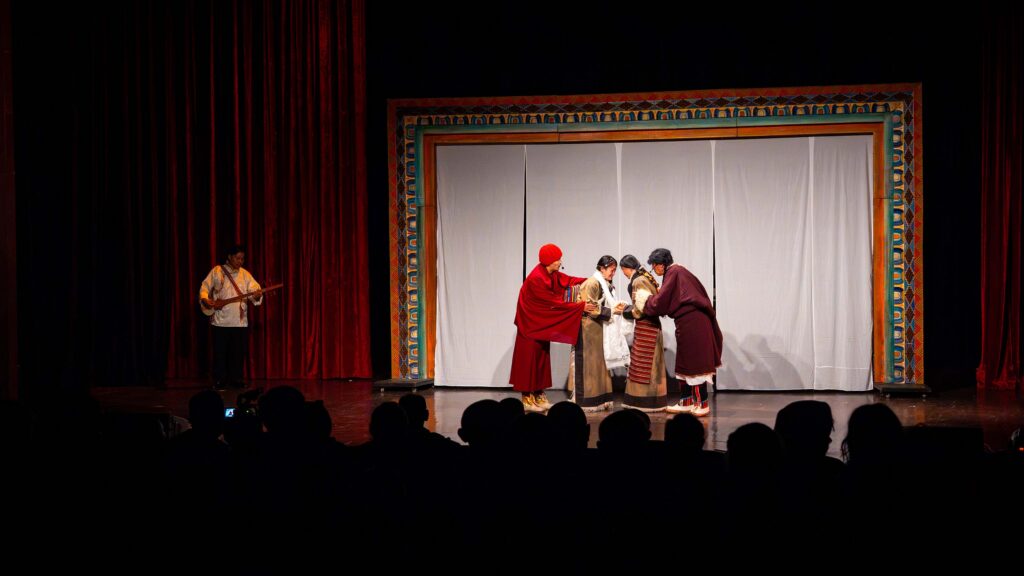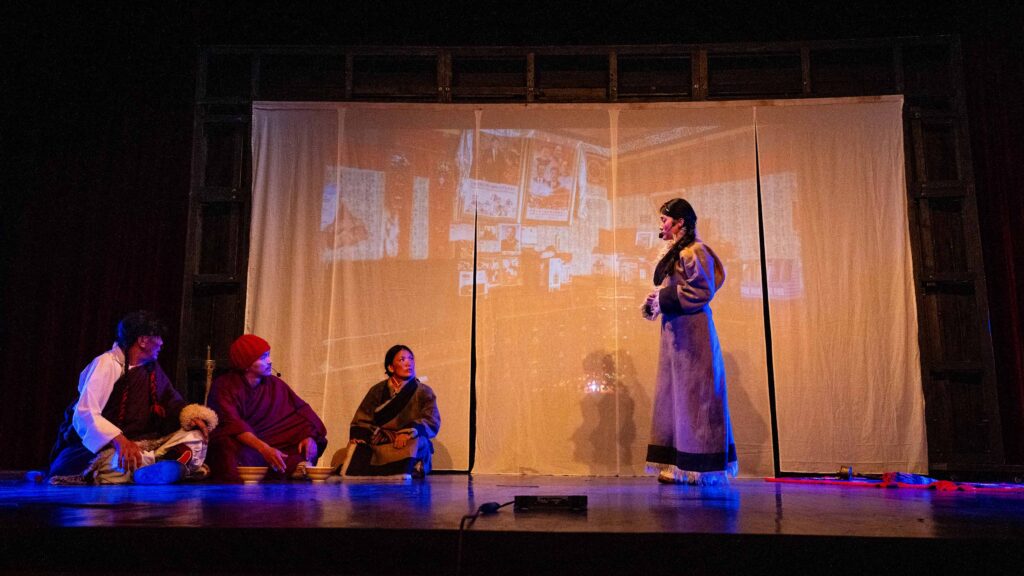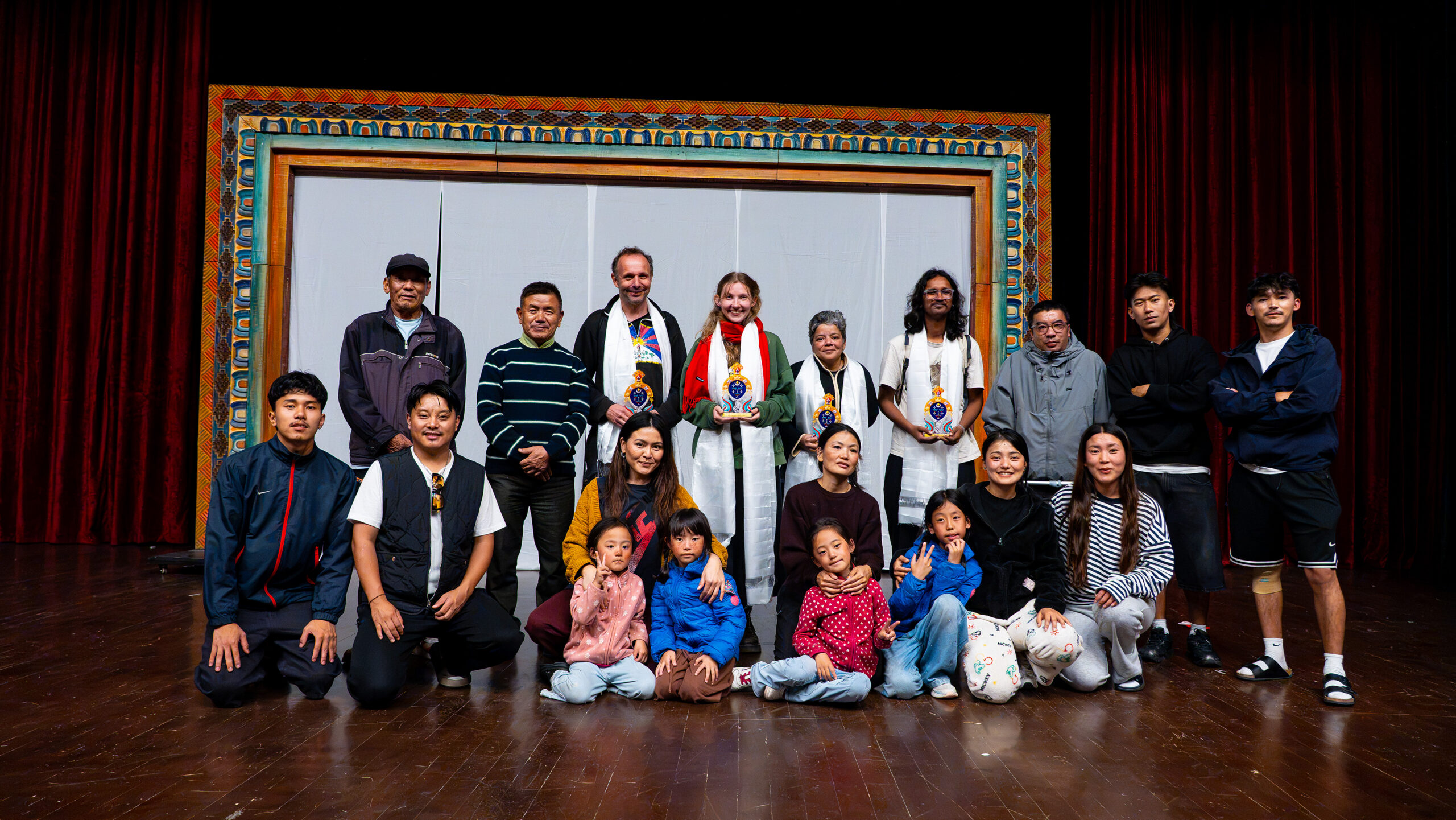

Tibetan Institute of Performing Arts (TIPA) staged a new play on residential schools in Tibet on 24th September as part of activities marking Tibetan Language and Culture Preservation Week.The premiere held at TIPA was attended by Education Kalon Ugyen Tenzin of the Central Tibetan Administration (CTA) as the chief guest, along with senior CTA officials, representatives of Tibetan schools, civil servants, journalists and other invited guests.
Titled Residential Schools in Tibet, the play was written by TIPA researcher and playwright Lhashol Sonam Tseten and performed by TIPA artists. The production examines the growing use of residential schools in Tibetan areas and explores concerns surrounding the transmission of Tibetan language, culture and traditional values.
In his opening remarks, TIPA Director said the production was developed in response to the Kashag’s call for Tibetans in exile to organize activities during the fourth week of September aimed at preserving and promoting Tibetan national identity.He said TIPA chose theatre as a medium to engage with contemporary issues affecting Tibetan society and to raise awareness of challenges surrounding the preservation of Tibetan language and cultural identity.
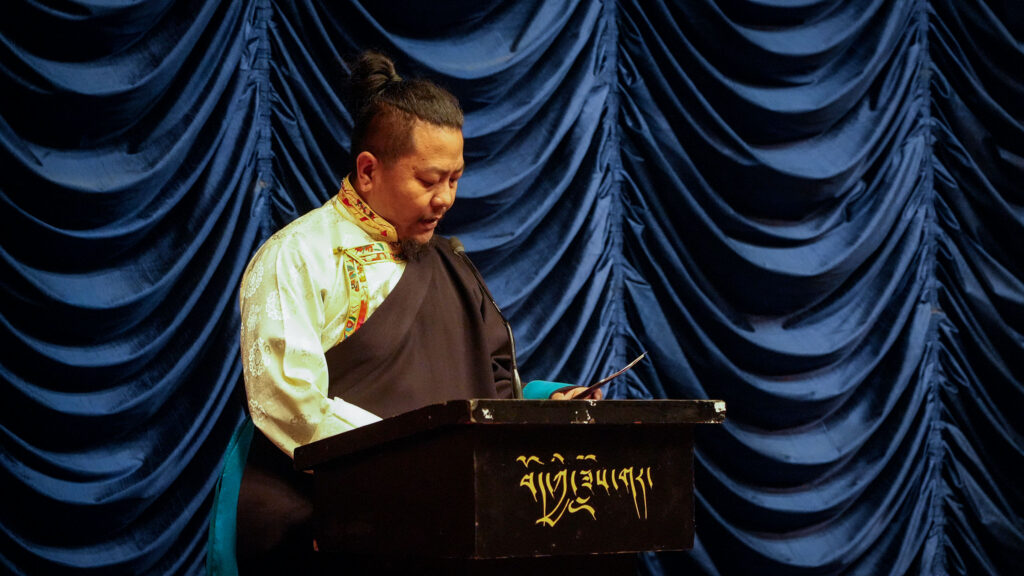
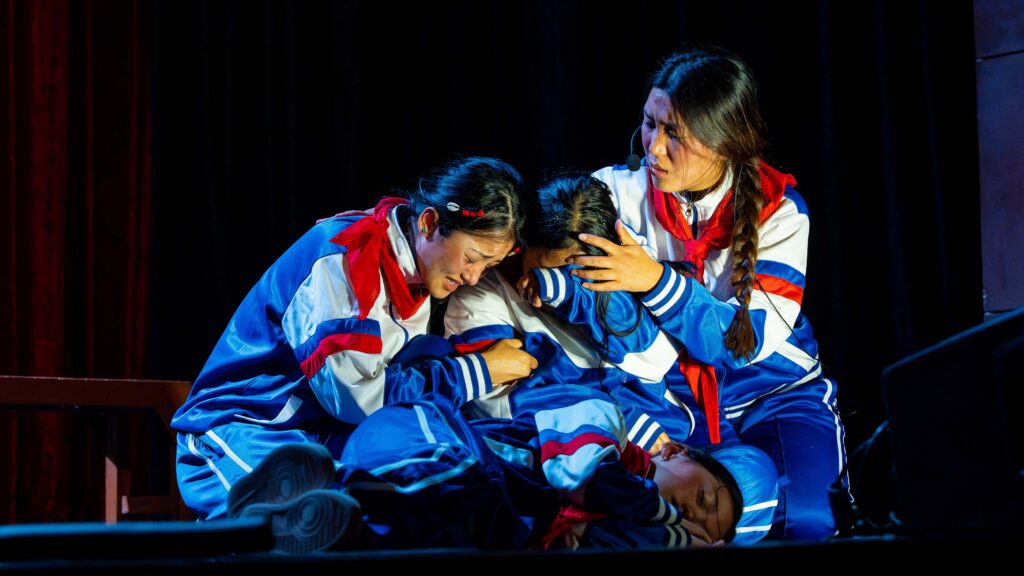
The Director General also highlighted TIPA’s longstanding role in preserving and promoting Tibetan performing arts. Established in 1959, the institute has spent more than six decades preserving traditional Tibetan performing arts, particularly Ache Lhamo, as well as Tibetan music, dance and theatre.The play portrays concerns raised by the Tibetan exile community over developments inside Tibet, particularly the expansion of residential schooling for Tibetan children. It depicts the separation of children from their families and explores the challenges of maintaining Tibetan language, cultural traditions and identity within the residential-school system.
Speaking after the performance, Education Kalon Ugyen Tenzin commended TIPA for producing the play within a relatively short period. He said the production presented the situation surrounding residential schools in Tibet in a compelling and emotionally powerful manner.The Kalon also suggested that the play be taken to Tibetan settlements and particularly Tibetan schools across India, allowing students and wider communities to engage with the subject through theatre.In his vote of thanks, TIPA’s Director General said the institute plans to take the production to Tibetan schools and settlements in different parts of India. He also said TIPA intends to present the play to Indian audiences in the future.
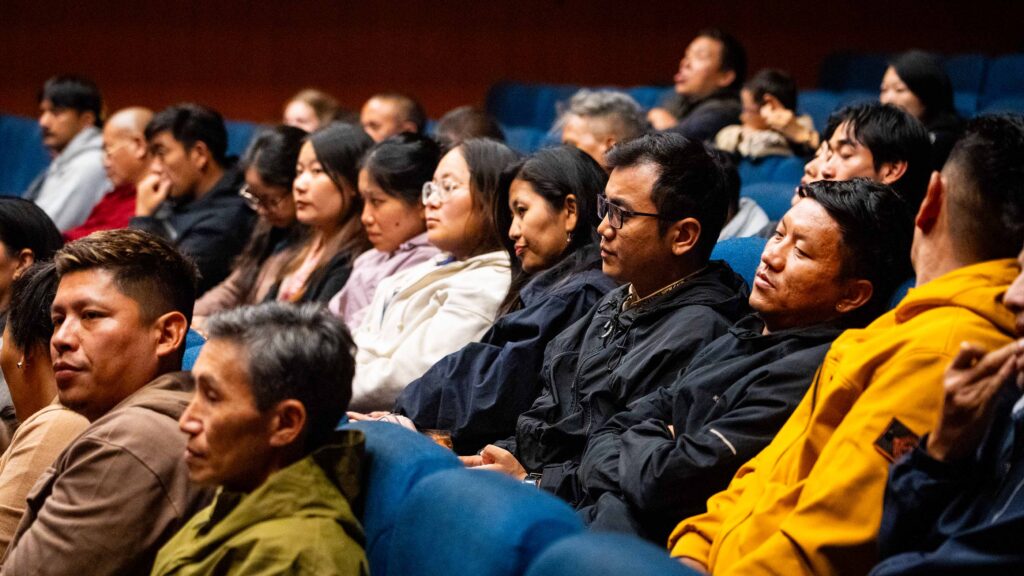
The performance received an emotional response from the audience, with several attendees expressing appreciation for the artists and the production’s portrayal of issues related to Tibetan language and cultural preservation.
The new production is part of TIPA’s broader efforts to use performing arts not only to preserve traditional Tibetan artistic forms but also to engage with contemporary issues affecting Tibetan society, language, culture and identity.